

Bali Pass: The Last Door Between Two Valleys, Where Only The Mountain Lets You Pass
If Har Ki Dun is a dream, Ruinsara is the secret inside that dream. And Bali Pass is the door that guards that secret.
⏱️ 6 min readAt 16,207 feet (4,950 M), standing on a knife-edge ridge where one side is Har Ki Dun Valley and the other side is Yamunotri Valley, you understand why trekkers call it the most thrilling pass crossing in India. It is not a trek. It is a test. Of your legs, your lungs, and your love for the Himalayas.
Bali Pass is not where tourists go. There is no chai shop, no horse, no crowd chanting. There is only snow, loose stones, a 70-degree snow wall, and a 6-inch narrow ridge where one wrong step is the end. That is why only a few people reach there. And those who reach, never come back the same.
The story says, Bali (brother of Lord Hanuman) stayed in a natural rock cave called Odari for one night on his way. That cave still exists at 13,150 feet. You will sleep just below it. And you will wonder, how did he cross this pass without shoes, without rope?
The Journey - One Valley To Another, One Life To Another
Bali Pass is not one day. It is eight days of slowly leaving the world behind.
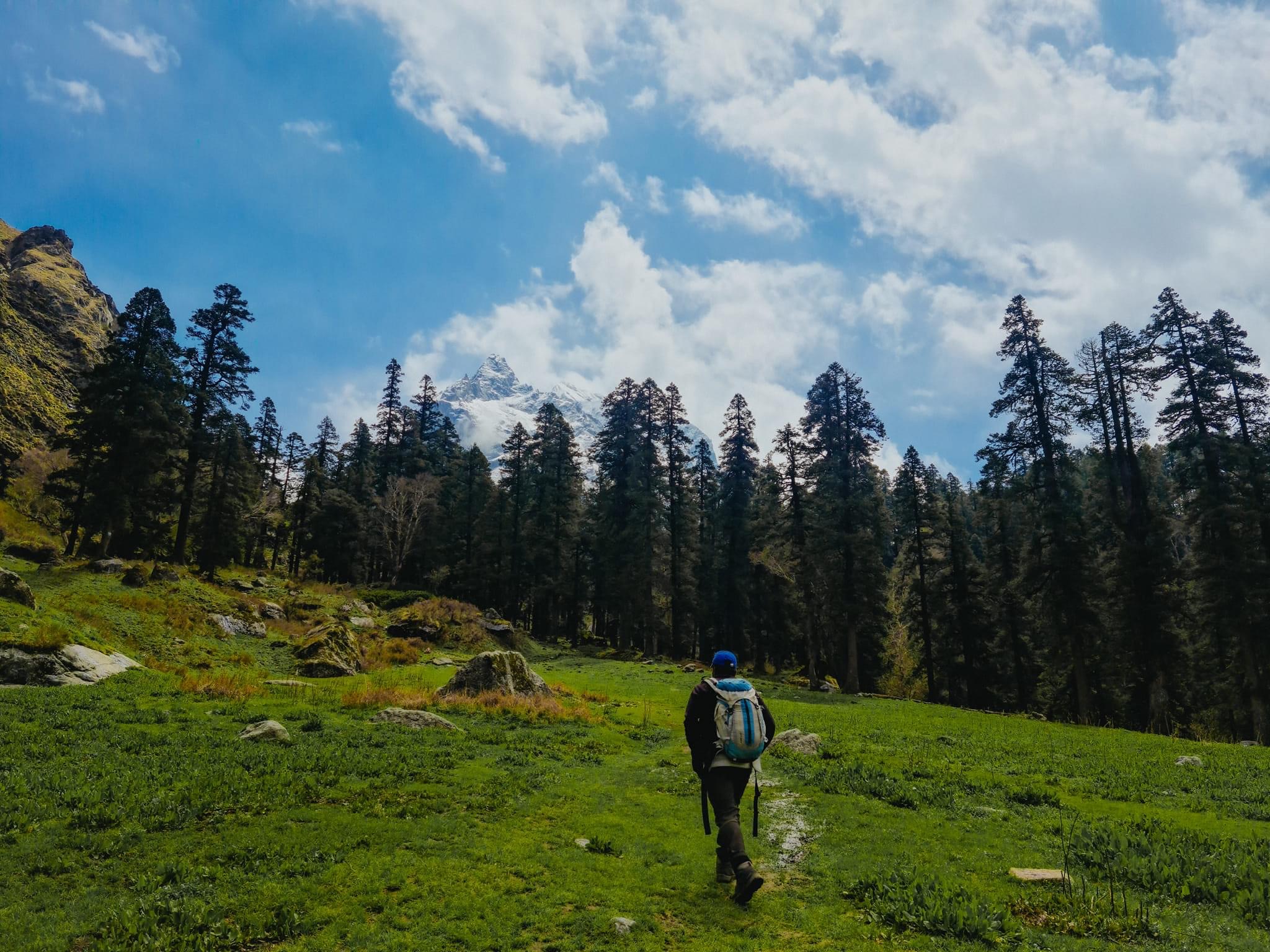
It starts from Sankri (1,920 M), the last village of Govind Wildlife Sanctuary. The same Sankri from where Har Ki Dun, Kedarkantha starts. But after Taluka, everyone goes left to Har Ki Dun. You go right, with Supin River on your side. Through villages like Gangaar and Dhatmir, where people still live on wood and apple farming, where children still say namaste to strangers.
By Day 3 you reach Rainbasera (3,086 M), walking beside the Supin river. You cross Debshu Bugyal and for the first time you see Kala Nag (Black Peak) - 6,387 M, standing black and fearless.
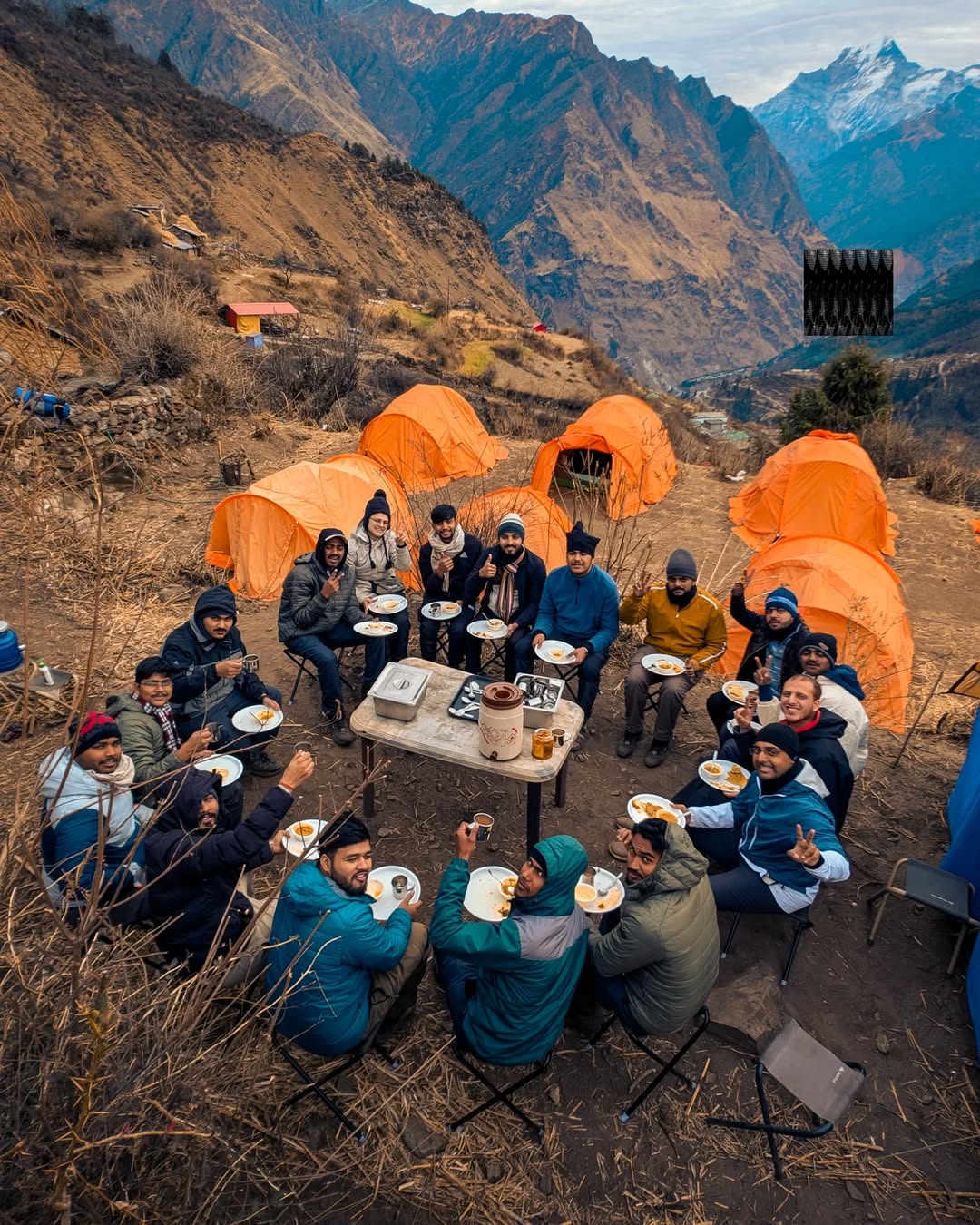
Day 4 is Ruinsara Tal (3,565 M). This is the soul of this trek. A glacial lake surrounded by meadows and rhododendrons, on one side Bandarpoonch peak, on the other side Dhumdhar Kandi. There is no temple here, but the lake is more sacred than a temple. Locals say, Gods come to drink water here. You will camp on the banks, in wooden huts, and at night you will hear the sound of the lake freezing.
Day 5 is short - Ruinsara to Odari (4,008 M). 4 Km only. You descend to Supin river, cross it, and climb to a meadow where a giant rock stands - Odari cave. Here Bali stayed. From here you see Swargarohini I & II - the peaks that Pandavas used to go to heaven. Here your trek leader will teach you how to use ice axe, crampons and rope. Because tomorrow is not trekking, it is mountaineering.
Day 6 - Odari to Base Camp (4,678 M). Only 3.25 Km but the hardest 3 Km of your life. A 60-degree incline full of loose stones. Every step you go up, you slip half a step. At 15,300 feet, your breath finishes. Oxygen is 40% less. Water freezes inside the bottle. This night you will not sleep. You will keep checking your tent zip, your shoes, your head torch. Because at 4 AM next day, you have to cross the pass.
Day 7 - Summit Day - Base Camp to Lower Dhamni via Bali Pass (4,950 M). You start at 6 AM in dark, with head torch. First 2 hours on snow - white snow wall of 70 degrees. You have to kick your crampons hard, hold your ice axe. If you slip, rope will hold you. Slowly, slowly, you reach the top.
And then everything stops.
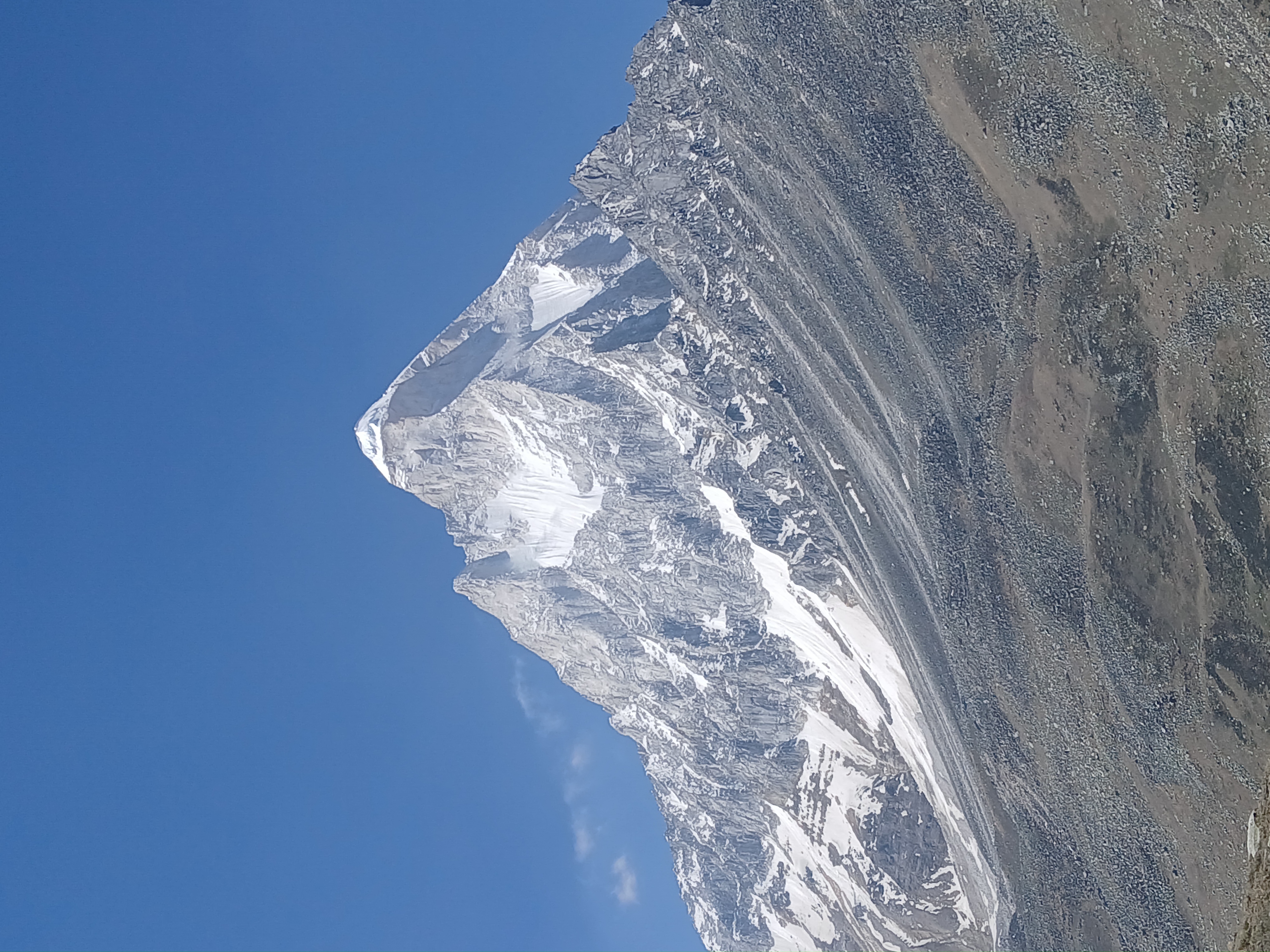
On Bali Pass, at 16,207 feet, you stand on a ridge that is just 1 foot wide. On your left is Ruinsara Valley, Har Ki Dun, Swargarohini. On your right is Yamunotri Valley, Bandarpoonch, Kala Nag. Behind you is the entire Garhwal Himalayas. In front of you is the sky. The wind is so strong you cannot stand without support. You have no words. You just sit.
Then the toughest part begins - descending. Steep loose rocks, vertical descent. The famous 6-inch ridge walk to Upper Dhamni where you can keep only one foot at a time. 5 hours of descent to reach Lower Dhamni (3,415 M). Your knees will shake, but your heart will be full.
Last day you trek to Yamunotri (3,293 M) - the first Dham of Char Dham. You take a dip in the hot sulphur spring that takes away all 7 days of body pain. You do darshan at Yamunotri shrine, then walk 5 Km down to Jaan Ki Chatti where your vehicle waits to take you back to Dehradun.
Why Bali Pass is Special?
Har Ki Dun can be done by anyone, Bali Pass can only be done by those whom the mountain allows.
It is one of the few treks in India where you start from one valley and end in a completely different valley. You start from the culture of Govind Sanctuary and end at the faith of Yamunotri.
It breaks your body on Day 6 and Day 7, but it makes your soul.
If Kedarkantha is introduction, and Har Ki Dun is story, then Bali Pass is the climax.