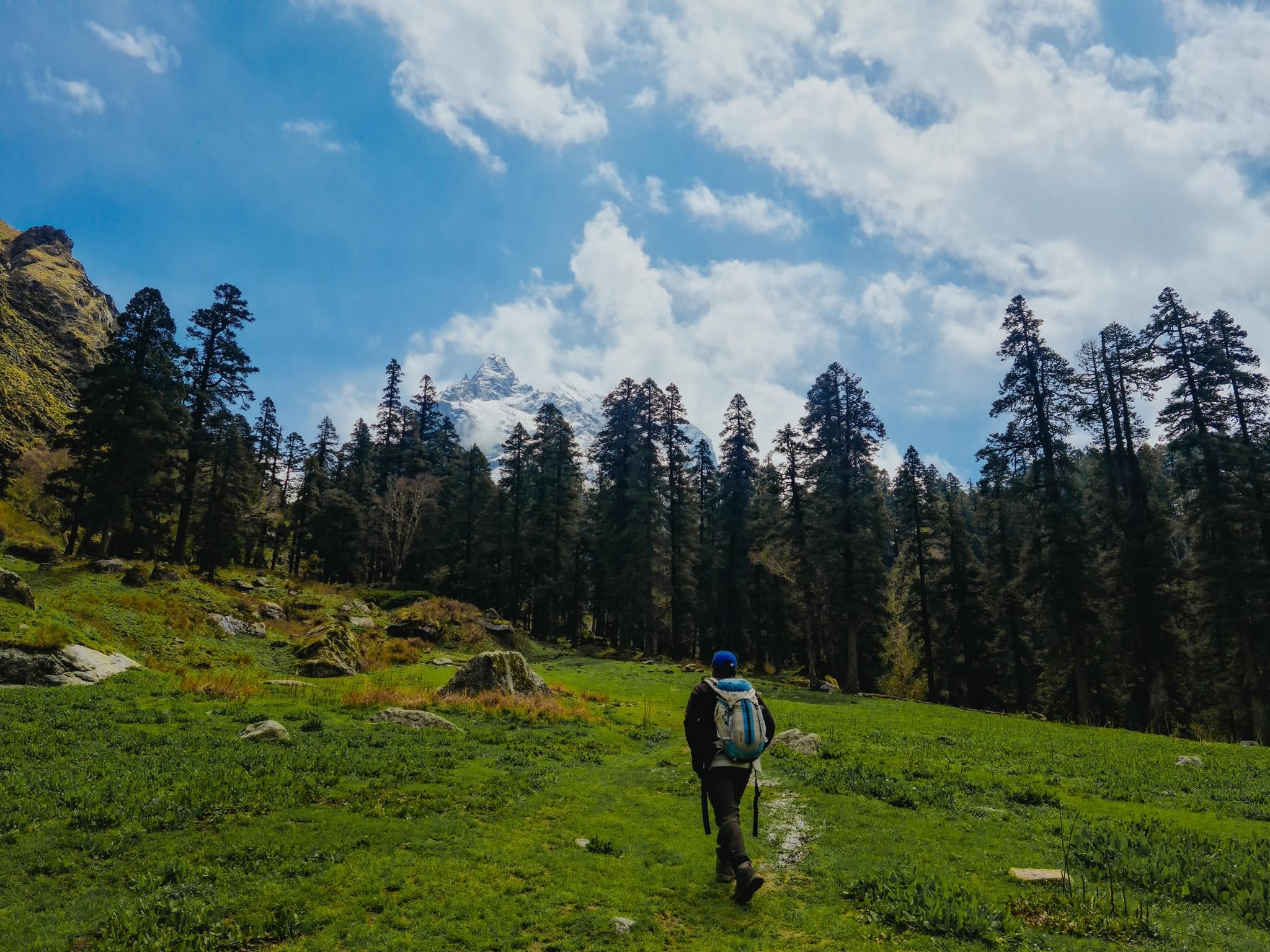


Harshil — Where Ganga Rests, Apples Blush And Time Stops
There is a place in Uttarakhand where the Bhagirathi river does not rush. It slows down, makes a wide U-turn, and rests.
⏱️ 6 min readOn that resting point, between dense deodar forests and snow peaks that rise like white walls, lies a valley so beautiful that the British called it Mini Switzerland. Its name is Harshil Valley.
The Last Real Himalayan Village Before Tibet
Harshil is not a hill station. It is a valley at 9,005 feet, 26 kilometres before Gangotri Dham, in Uttarkashi district — the last cluster of villages where life still runs on wood, wool and apples.
The valley is made of five villages — Harshil, Dharali, Mukhba, Jhala and Bagori. Walk from one to another and you cross only 7 kilometres, but you cross centuries. In Dharali you see apple orchards with red apples hanging like lights. In Bagori you see 400-year-old wooden houses with carvings no modern architect can copy. In Mukhba you see a wooden temple where Goddess Ganga herself lives for six months in winter, when her temple in Gangotri is buried under snow.
This is a valley where two cultures meet — Garhwali farmers and the Jadh tribe of Tibetan origin, who came here after the 1962 war, speak a different language, weave their own wool, and still remember the trade route to Tibet that passed through Nelong Valley.
Why Harshil Is Different From Mussoorie, Manali, Auli
Mussoorie has crowd. Manali has traffic. Auli has ski resorts. Harshil has silence.
You don't go to Harshil to do things. You go to Harshil to not do things — to sit on a rock by the Bhagirathi and watch the water turn blue, to drink chai in an orchard while your host tells you how his grandfather planted these apple trees, to see sunrise turn the 6,109-metre Shrikanth peak from white to gold to pink in 10 minutes.
There is no mall road here, only a river road. No DJ night, only a bonfire under a million stars, because there is no light pollution.
The Man Who Made Harshil Famous — Pahari Wilson
In 1842, a British soldier named Frederick Wilson deserted the East India Company army and ran into these mountains. He fell in love with a local girl, settled in Harshil, built a wooden cottage in 1864 and started the first apple orchard and deodar timber business.
Locals called him Pahari Wilson. He brought the first apple seeds from England, and today the Harshil apple is considered the best in Uttarakhand — sweet, crunchy, red like cheeks in winter. His cottage still stands, his watermill still runs. If Harshil looks like Europe, Wilson is one reason.
Three Jewels of Harshil
Gartang Gali — the wooden skywalk. 16 km from Harshil, at 11,000 feet, a 150-metre-long wooden bridge hangs on a vertical rock face, built 150 years ago by Peshawari Pathans to reach Tibet for trade. Below is a 500 feet straight drop; in front is Nelong Valley, a cold desert like Ladakh. Closed for 60 years after the 1962 war, it reopened in 2021 and is today India's most thrilling bridge.
Mukhba — the winter home of Ganga. When Gangotri temple closes in November due to heavy snow, priests bring the idol of Goddess Ganga to Mukhba village, 1 km above Harshil. For six months, all pooja happens here — so you can have Ganga darshan even in January, when Gangotri is under 10 feet of snow.
Bagori — the heritage village. Every house here is made of wood, stone and slate, with balconies carved with flowers and gods. People make pure woollen shawls, caps and socks, and this village was shown in the film Ram Teri Ganga Maili. Walk inside and an old lady will call you for chai — that is Harshil.
Harshil is not a place you tick off on a map. It is a place you feel.